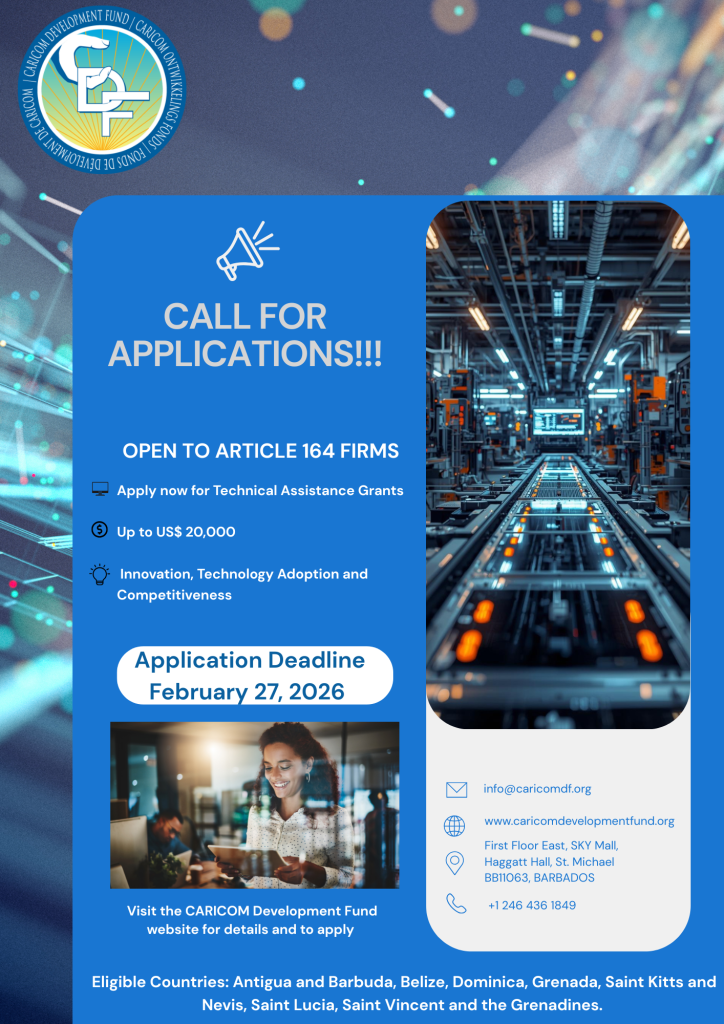
Article 164 of the Revised Treaty of Chaguaramas (RTC) is a strategic initiative designed to reduce economic disparities within the CARICOM region. It focuses on enhancing the production capacity, efficiency, and competitiveness of industries in the Less Developed Countries (LDCs) of CARICOM.
Under the Article 164 regime, temporary protected status is granted to specific industries in CARICOM LDCs which allows them a period of time to develop without full competition from other CARICOM countries. The industries under protection are crucial for fostering industrial growth in these Member Countries.
"CARICOM
"The
"Antigua
"Belize"
"dominica"
"grenada"
"st
"St
"St
"Article
"The
- Aerated beverages
- Aerated waters and other waters
- Beer and stout
- Malt
- Curry powder
- Pasta
- Prepared animal feeds
- Wooden and upholstered furniture
- Solar water heaters
- Industrial gases: Oxygen, Carbon Dioxide and Acetylene
- Wheat or meslin flour
- Paints and varnishes
- Candles of paraffin wax
The implementation of the suspension of Community origin treatment for Article 164 industries was initially approved in November 2019 by the Council for Trade and Economic Development (COTED). This suspension was extended in May 2024, allowing an additional 5-year period for pasta and curry powder, and a 10-year extension for all other Article 164 industries. These extensions, effective from August 2024, provide continued protection for the industries in LDCs to enhance their competitiveness.
In line with COTED’s 2019 decision regarding Article 164, the Caricom Development Fund (CDF) commissioned a comprehensive study to assess the needs of these industries. The study, completed in June 2022, achieved the following key milestones:
- Identified 85 firms as potential beneficiaries of the support programme.
- Analyzed capacity gaps and performance issues within the selected firms.
- Developed a 5-year Programme of Support Measures valued at US$12.6 million, designed to assist 70 firms in improving their competitiveness.
- Established the framework for implementing the programme, including recommendations for institutional coordination and monitoring.
A Programme Coordination and Monitoring Committee (PCMC) was recommended to guide the implementation of the Programme. In 2024, the CDF took steps to establish the institutional framework necessary for the programme’s management:
- A Programme Coordinator was appointed.
- The PCMC was officially constituted
CDF and Partners' Collaborative Implementation of Article 164
The Article 164 Programme of Support Measures is a multi-agency collaborative initiative, with key national and regional partners contributing to its success. These include:
National Partners
Chambers of Commerce
Bureaus of Standards
Trade and Business Development Agencies
Regional Partners

CARICOM Secretariat

Caribbean Export Development Agency (CEDA)

Caribbean Development Bank (CDB)

Caribbean Regional Organisation for Standards and Quality (CROSQ)
Caribbean Agricultural Health and Food Safety Agency (CAHFSA)
This multi-stakeholder collaboration ensures that the Article 164 Programme has the necessary resources, expertise, and coordination to deliver measurable outcomes and support economic development in the region’s Less Developed Countries.
The Article 164 Programme of Support Measures represents a vital initiative aimed at enhancing the competitiveness and sustainability of key industries in CARICOM’s Less Developed Countries. Through targeted support, infrastructure improvements, and cross-agency collaboration, the programme seeks to bolster the region’s industrial capacity and reduce economic disparities. As the programme moves forward, continued collaboration and institutional strengthening will be critical to achieving its long-term objectives.
A Programme Coordination and Monitoring Committee (PCMC) established to guide the implementation of the planned Support Measures is comprised of representatives from the Member States and regional organisations.
CARICOM Secretariat
Caribbean Export Development Agency (CEDA)
Caribbean Development Bank (CDB)
Caribbean Regional Organisation for Standards and Quality (CROSQ)
Caribbean Agricultural Health and Food Safety Agency (CAHFSA)

Government of St Lucia

Government of Belize